
History of FILACP:
The Legacy of Ibero-Latin American Plastic Surgery
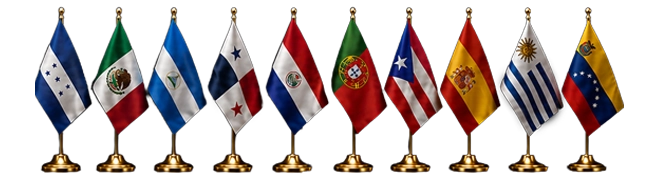
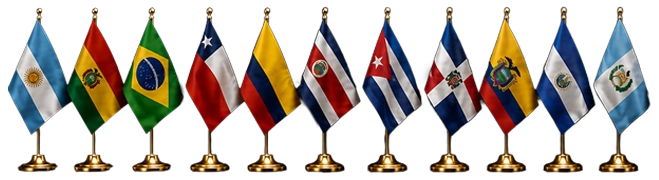
The Ibero-Latin American Federation of Plastic Surgery (FILACP) is today the foremost benchmark of seriousness, responsibility and medical professionalism recognized worldwide. With more than 10,000 plastic surgeons who are members of 22 Societies, our history is a testament to integration, science and brotherhood.
The Origins: The Latin American Society of Plastic Surgery (1940)
It all began with the vision of a select group of pioneers who took on the historic task of organizing the specialty in the region. In July 1940, in São Paulo, Brazil, the Latin American Society of Plastic Surgery was formally established thanks to the efforts of Drs.:
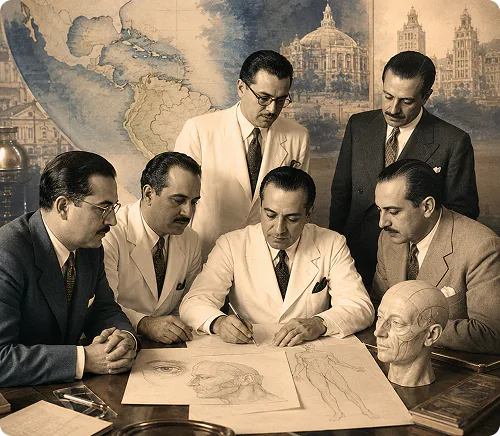
- Oscar Ivanissevich, Lelio Zeno, Héctor Marino and Ernesto Malbec.
- Antonio Prudente, Rebello Neto and Linneu Silveira.
- Enrique Apolo and Pedro Pedemonte.
- José Vélez Diez de Canseco.
- Emilio Aldunate Phillips and Rafael Urzua Casas-Cordero.
The first congress of this fledgling society was held in 1941 (Rio de Janeiro and São Paulo). At that time, transport limitations meant congresses had to be held in two cities of the host country to make it easier to bring specialists together. After the successful meetings in Argentina (1942) and Chile (1944), it was agreed to hold biennial regional and general congresses.
The Official Birth of FILACP (1974)
The seed of transatlantic integration was planted in 1965, when Argentina invited the societies of Spain and Portugal to the First Ibero-American Congress. The cultural and linguistic ties proved unbreakable.

After the Córdoba Manifesto (1971) and the agreements in Brazil (1972), the definitive milestone came in 1974, during the XIII Congress in Caracas, Venezuela. There, the creation of the Ibero-Latin American Federation of Plastic and Reconstructive Surgery (FILACP) was approved unanimously, officially uniting the societies of Latin America and the Iberian Peninsula.
Our Founding Objectives
Under the leadership of Dr. Xavier Ojeda (Mexico), the first Secretary General, the mandates we still fulfill today were established:
Assist in the formation of national societies.
Hold high-level Biennial Congresses.
Promote scientific research through an official journal.
Encourage postgraduate training.
Safeguard the rigor and ethics of members.
Create an Educational Foundation.
Establish an International Award for Resident Physicians.

Academic and Institutional Milestones
The Official Journal (1975)
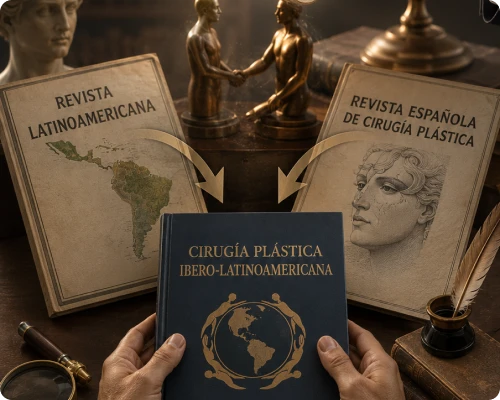
Before the Federation, there were two major journals in Spanish. In an act of generosity and shared vision, the editors set aside their personal projects to launch “Cirugía Plástica Ibero Latinoamericana” in January 1975. With 4 issues a year, it is the Federation's flagship publication.
Leadership and Own Headquarters
Over the decades, executive management has evolved. In 2006, the Board of Directors (made up of the 22 national presidents) changed the post of “Secretary General” to that of FILACP President, renewable every two years, bringing constant dynamism to the institution.
That same momentum made it possible to acquire our official headquarters in Panama City in 2013, a strategic connectivity hub for all member countries, achieved with the invaluable support of allied industry.

Educational Foundation
A pillar of academic development, the Foundation has been key in promoting teaching. Noteworthy is the publication of the “Texto de Cirugía Plástica, Reconstructiva y Estética” (currently in its excellent cc), established as the leading training reference in the Spanish language.

Half a Century of Biennial Congresses (1976 - Present)
Since the first FILACP Congress in Quito (1976), this landmark event has become the largest ecosystem for scientific and social exchange in our specialty.
Over almost 50 years, the venue has rotated, strengthening regional brotherhood, taking in Guadalajara, Valencia, Buenos Aires, Asunción, San Juan, Cartagena, Guatemala, Lisbon, Viña del Mar, Rio de Janeiro, Santo Domingo, Lima, Cancún, Seville, Quito, Panama, Medellín and Punta del Este.
In April 2024, we celebrated FILACP's 50th Anniversary during the XXV edition in Buenos Aires, Argentina. Looking ahead, our next major gathering will be on March 6, 2028 in the beautiful city of Madrid, Spain.
Our headquarters is now 100% operational! We have reached a milestone at FILACP. Starting in July 2026, we consolidate our organizational structure with an on-site administrative team, allowing us to professionalize our management in service of all Member Societies.
FILACP Today: Our 5 Strategic Pillars
Excellence
Professionalism
Teaching Foundation and Research.
Transparency
Governance